
Algarve is the most critical Portuguese region in the face of the climate crisis
Research by the US space agency NASA points to the Algarve region as the most critical in the face of climate change in Portugal. An
We didn't find any happenings mapped to your criteria.
Try the traditional search to find articles not yet mapped with RUA.
We didn't find any happenings mapped to your criteria.
Try the traditional search to find articles not yet mapped with RUA.
We didn't find any happenings mapped to your criteria.
Try the traditional search to find articles not yet mapped with RUA.
We didn't find any happenings mapped to your criteria.
Try the traditional search to find articles not yet mapped with RUA.
In any themed party there is a great tendency to waste. Carnival is no different, and so we share with some tips to make your party and experience more sustainable.
Make your own Carnival costume
One way to avoid consumption and waste is to choose to make Carnival costumes that can be easily maneuverable. The most sustainable clothes are the ones we already have, right? Therefore, for this Carnival Peggada suggests the cardboard box.
Just get a cardboard box, scissors, paint, and a lot of creativity. Cut two circles for the arms, and left the bottom of the box free for the legs. Then, just paint the box, and you can be anything you want: an aquarium, a television, a Rubik’s Cube, or even a skeleton. This carnival costume idea is applicable to kids and adults, it all depends on the size of the box you have.
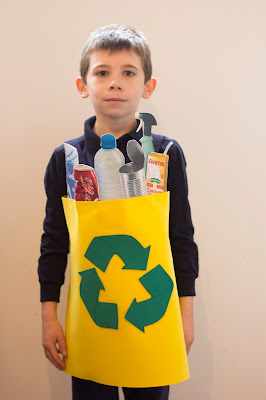
Similar to this idea there are many others that start with the materials that you already have: the monochrome suit is another example. If you have a shirt and pants of the same color, you can easily add props such as leaves, paints, paper, that turns you into a tree, a recycling bin or an M&M. In this Peggada article you can explore some examples of homemade costumes without much expense or waste.
Embrace second-hand
Buying second-hand suits is a great option, not least because the possibility that that suit will only be worn for one day is great. We can also borrow from friends or family members, in order to rotate the closet without purchasing new pieces. So that superhero costume you wore last year can be worn this year by a friend, who will lend you the lion costume from two carnivals ago.
Give up glitter
Although glitter is a must have lately when it comes to partying, it is already known that the planet does not enter into this celebration. This material is made of microplastics that, being extremely small, are not filtered and end up in rivers and seas. Some biodegradable versions have since been created, but studies say that the impact is just as negative. So let’s really avoid this adornment.
Avoid confetti
Confetti is also very polluting to the planet. Collecting leaves from trees or plants is a great alternative to products made of plastic, and you only need two things: a walk and a hole punch. Make little holes all over the sheet, and the little balls that are normally discarded when we do this gesture with paper, are – surprise – your confetti.
For an Eco-Friendly Home Party
Balloons are also overused this time, which are products – again – made of plastic. In order not to lose the spirit of the party, alternatives such as hanging CDs from the ceiling or paper lanterns are also good options. The lanterns can even be made of plastic, the important thing is that they can be reused for many years.
Ultimately, what these tips have in common is the need to reinvent ourselves. If we are creative and ready to embrace challenges, all parties are possible in a sustainable world. They also manage to have a different flavor: we don’t generate more waste – or, at least, we do our best not to.

Research by the US space agency NASA points to the Algarve region as the most critical in the face of climate change in Portugal. An

The project will have to respect environmental requirements such as the planting of trees, the introduction of beehives and the ceding of the land for pasture.

The amount achieved – which is expected to reach 450 million euros annually – will be earmarked for cleaning streets and parks. Starting in 2025,
This article promotes an action that encourages the reduction of waste generation through prevention, reduction, recycling, and reuse.
➡️ To discover more businesses that are aligned with Sustainable Development Goal 12 “Sustainable Production and Consumption” click here.
➡️ For news, tips and interviews about this topic, click here
➡️ Want to know more about the 17 United Nations Sustainable Development Goals? Click here
Esta publicação também está disponível em:
Português (Portuguese (Portugal))